

.webp)


Outsourcing Customer Support in a Cost-Conscious Economy
.jpg)
For service-based businesses such as healthcare, finance, tech, and hospitality, around-the-clock call support is a business necessity. Customers here don’t plan questions, service requests, or urgent issues around your operating hours.
Their experience depends heavily on accessibility, quick responses, and trust; any lapse in service quality can damage client retention, brand reputation, and overall business profitability.
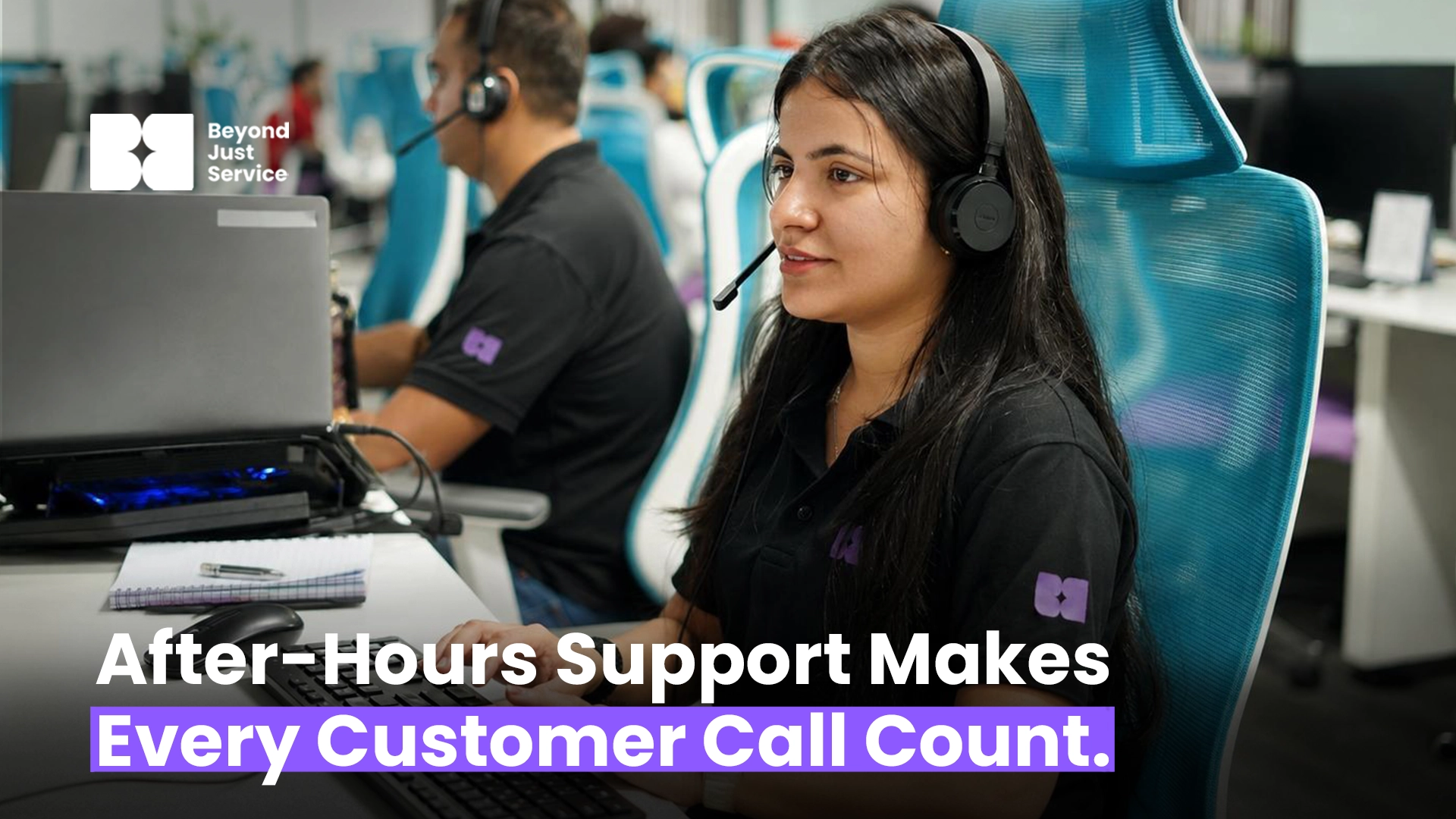
That is exactly where after-hours support brings value. It gives customers a reliable point of contact beyond standard working hours and provides businesses a structured way to handle demand outside the core team’s schedule.
After-hours support covers the customer-facing and administrative work that continues outside standard business hours.
The focus remains on keeping essential support accessible at all times. This includes:
With customers reaching businesses across multiple channels, service-based businesses need support that stays responsive.
The consequences can vary across industries, but the underlying issue remains the same: customer demands are unpredictable.
Patient enquiries and appointment administration don't pause outside business hours.
Extended service coverage provides a channel for routine requests and gives teams a structured process to identify and escalate clinical matters.
Value: Quick response to urgent cases, reduced appointment friction.
Customers expect timely responses to account queries, payment concerns, and application updates.
After-hours support keeps communication active, documents enquiries, and routes complex cases to specialist teams.
Value: Builds trust through responsiveness, prevents issues from stalling.
Unresolved technical issues outside office hours interrupt customer workflows and create larger backlogs the next day.
A call centre solution provider captures information, categorises by urgency, and escalates according to service protocols.
Value: Reduces downtime impact, improves customer retention.
Guests need assistance with reservations and cancellations across varying schedules.
Support beyond standard business hours keeps enquiries organised, connects customers with immediate assistance, and ensures requests reach the right team when needed.
Value: Maintains guest satisfaction, prevents booking loss.
Customers shop outside standard hours. Order questions, payment issues, and returns can halt purchases or cause cart abandonment.
After-hours support captures order details and routes requests into resolution workflows.
Value: Reduces cart abandonment, improves conversion rates.
Research highlights the importance of access to customer support. A survey highlights that 42% of consumers dissatisfied with customer service cited difficulty getting in touch when they tried.
Customers contact businesses when they need help, not when the internal team happens to be available.
Support outside standard hours gives those customers the answers they need without any delay.
Not every request requires immediate intervention, but each request needs a designated escalation procedure.
An after-hours team does the following:
This prevents urgent requests from sitting without direction.
Without a clear process, after-hours demand becomes the next day's problem. Staff returns to missed calls, incomplete information, and a queue of requests that need sorting before work begins.
A structured handover gives the daytime team a clear record of what happened and what needs attention.
Once a contact centre solution becomes part of your service model, the impact reaches beyond call coverage.
For healthcare, finance, technology, hospitality, and e-commerce businesses, customer needs do not stop when the office closes.
After-hours support gives customers a clear route to help, keeps enquiries moving, directs urgent matters through the right process, and gives internal teams a structured handover.
Beyond Just Service provides customer-facing services that help businesses manage enquiries, email management, helpdesk and ticketing support, inbound and outbound call handling, appointment scheduling, and customer retention beyond their standard operating schedule.
Our support function is built around accessibility, accountability, and regulatory compliance, such as GDPR, HIPAA, or PCI-DSS. We balance human touch with technology to give your customers an exceptional service experience.
By providing 24/7 accessibility, ensuring that customer inquiries and urgent requests are handled immediately to maintain high satisfaction levels.
Multi-channel support, intelligent inquiry routing, and professional escalation protocols to ensure every customer interaction is managed with accountability.
They capture and categorise technical issues as they arise, preventing backlogs and ensuring that urgent cases reach teams according to established protocols.
Yes, it allows businesses to scale support without heavy overheads, providing professional lead qualification and customer assistance that captures value.
Contact centre reporting services provide internal teams with structured handovers and detailed data logs, allowing staff to track every interaction.
